

Highlights
- Infrastructure: Big investments in transport, defence, and rural development to fuel growth.
- Taxes: Simplified Income Tax and TDS/TCS to ease compliance and boost investment.
- MSMEs & Jobs: Credit support and incentives to strengthen small businesses and create jobs.
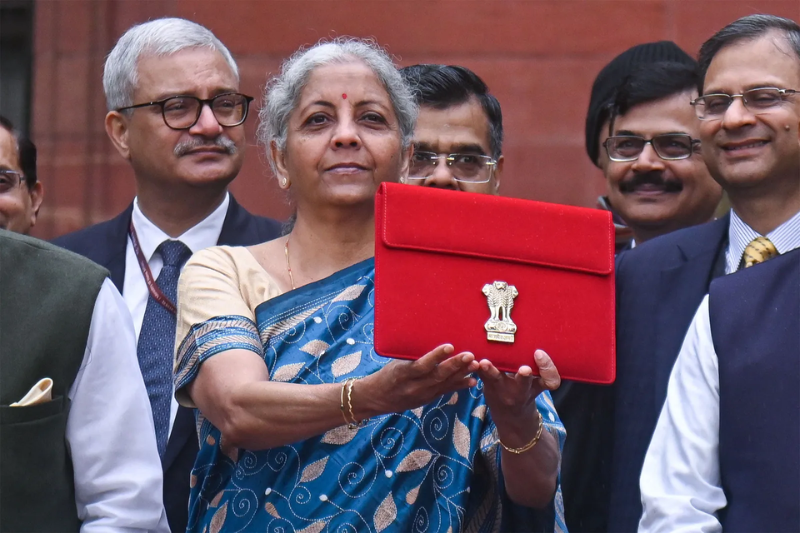
India’s Union Budget 2026-27, presented by Finance Minister Nirmala Sitharaman on February 1, 2026, focuses on sustained growth, fiscal discipline, and inclusive development. With the economy projected to grow 6.8–7.4%, the budget aims to strengthen key sectors like infrastructure, manufacturing, and MSMEs while promoting energy security and technological reforms.
Growth Outlook and Macroeconomic Strategy
The budget projects real GDP growth between 6.8% and 7.2% for FY26, supported by strong domestic demand, steady public capital expenditure, and a revival in private investment. Nominal GDP growth is targeted at around 10%, helping the government maintain a gradual fiscal consolidation path.
Structural reforms remain a key growth driver. The rollout of new Labour Codes is expected to improve workforce productivity and formal employment, while a recently concluded trade agreement with the European Union is projected to support exports and manufacturing-led growth.
Tax Reforms and Ease of Compliance
Tax simplification is a major pillar of the budget. The redesigned Income Tax framework focuses on reducing compliance burdens through simpler forms, clearer rules, and rationalised penalties. Minor tax offences have been decriminalised to build trust between taxpayers and authorities.
Under the Liberalised Remittance Scheme (LRS), the Tax Collected at Source (TCS) rate has been reduced to 2% on overseas tour packages, education, and medical remittances. TDS on manpower services has been standardised at 1–2%, offering relief to businesses and service providers.
To boost digital infrastructure, foreign cloud service providers using Indian data centres have been granted a tax holiday until 2047. The move aims to strengthen India’s data ecosystem and attract global technology investment.
Infrastructure Push Across Sectors
Public capital expenditure has been raised to ₹12.2 lakh crore, marking a 6.3% increase from revised FY26 estimates. Infrastructure spending remains the backbone of the government’s growth strategy.
Key initiatives include seven high-speed rail corridors, 20 new national waterways, and targeted investments in logistics and transport connectivity. Each City Economic Region (CER) will receive ₹5,000 crore over five years to accelerate development in Tier II and Tier III cities.
The budget also supports domestic manufacturing through incentives for construction equipment and a ₹10,000 crore allocation for container manufacturing. Nearly 200 legacy industrial clusters will receive infrastructure upgrades to improve efficiency and competitiveness.
MSME Growth and Manufacturing Revival
MSMEs receive focused support through a ₹10,000 crore MSME Growth Fund aimed at technology upgrades, exports, and scaling operations. An additional ₹2,000 crore has been allocated to top up the Self-Reliant India Fund.
To improve cash flow, Trade Receivables Discounting System (TReDS) usage has been mandated for purchases by central public sector enterprises. Para-professional training initiatives are expected to ease compliance challenges for small businesses.
The budget also targets deeper MSME integration into global value chains, with an emphasis on liquidity support, cluster-based development, and export competitiveness.
Human Capital, Healthcare and States’ Share
Human capital development features prominently, with the formation of an “Education to Employment” Committee to align skilling with labour market needs. The government will assess the impact of artificial intelligence on jobs and expand skilling programs in the services sector.
Healthcare allocations focus on expanding trauma care facilities and establishing five Medical Value Tourism hubs through public-private partnerships.States will receive ₹15.26 lakh crore in devolution, a 9.6% increase from the previous year. Jal Shakti allocations have also seen a significant rise, reflecting the focus on water security and infrastructure.