

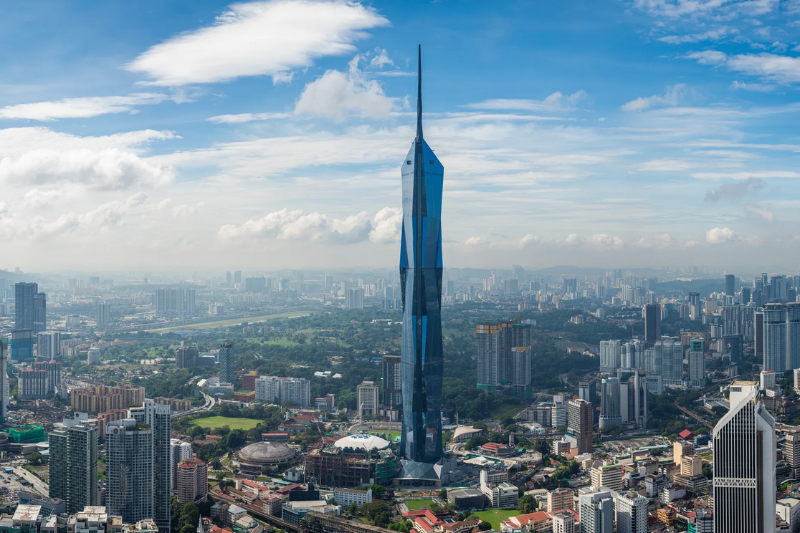
world’s tallest buildings: From Dubai to Kuala Lumpur, record-breaking skyscrapers are reshaping how cities grow, function, and define themselves. These towering structures are more than architectural marvels — they are bold statements of economic ambition, cultural identity, and engineering excellence. As urban populations rise and land becomes scarce, vertical expansion is redefining the future of global cities.
Also Read: 8+ Years of Waiting for the Dream Homes: Mahagun Montage Buyers & The Reality
Burj Khalifa: Engineering the Impossible
The Burj Khalifa stands at an astonishing 828 meters, making it the tallest building in the world since 2010. Its revolutionary, buttressed core structural system allows it to withstand strong desert winds while maintaining a sleek, tapering silhouette inspired by Islamic architecture and desert flowers.
Beyond its height, the Burj Khalifa functions as a vertical city. It houses luxury residences, corporate offices, hotels, and observation decks that attract millions annually. The project elevated Dubai’s global image, turning it into a symbol of modern ambition and futuristic design.
Merdeka 118: Cultural Identity Meets Modern Innovation
world’s tallest buildings: Rising 678.9 meters above Kuala Lumpur, Merdeka 118 is Malaysia’s tallest structure. Overlooking the historic Merdeka Square, the tower blends contemporary glass architecture with traditional Malaysian design elements.
Its energy-efficient facade, advanced elevator systems, and mixed-use spaces demonstrate how sustainability and innovation now define supertall construction. Merdeka 118 signals Kuala Lumpur’s arrival as a global architectural contender.
Petronas Towers: The Twin Icons of Southeast Asia
Before Merdeka 118, the Petronas Towers dominated the skyline. Completed in 1998, the twin towers were once the tallest buildings in the world. Their skybridge connector and Islamic geometric design symbolise Malaysia’s rapid economic rise in the 1990s.
Even today, they remain cultural and architectural landmarks recognised worldwide.