
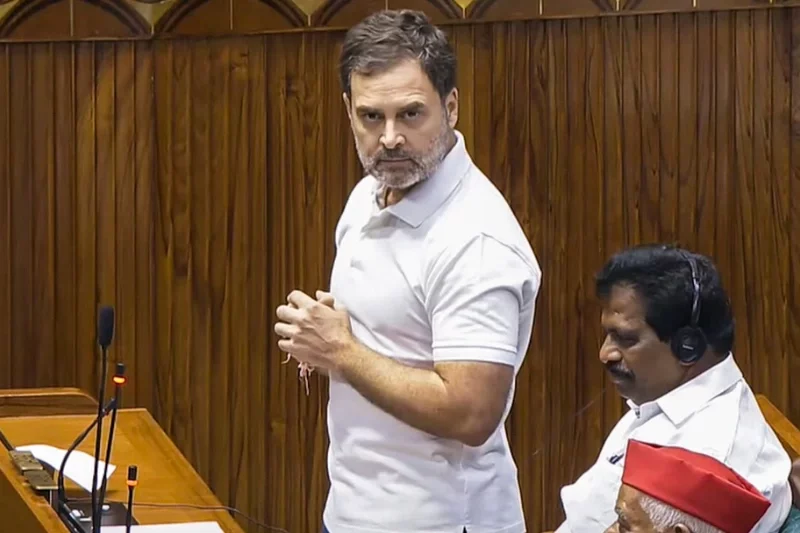
Rahul Gandhi has reignited political discourse after calling the new trade agreement “impossible” for India’s farmers versus the textile industry. His words have rekindled a dialogue about the effect of global trading agreements on domestic industries that provide employment to millions.
During a public gathering, he questioned whether the government had done enough to protect small-holder farmers and textile mill workers. He argued that the agreement would cause India to have to give away either agricultural stability or industrial growth.
Farmers vs Textile Mills: Why the Concern?
The textile industry is one of India’s largest employers of workers; millions of people are employed by the textile industry, primarily in Gujarat, Tamil Nadu and Maharashtra. Additionally, agriculture has long served as the backbone of rural India.
According to Gandhi, if there are international pressure to decrease import duties, this will create an influx of cheap foreign textiles into the Indian market, negatively impacting local mills and smaller manufacturers; however, there are also several clauses related to trade agreements that may affect agricultural exports or subsidies, thus creating a disadvantageous circumstance for farmers.
In Gandhi’s view, the fundamental dilemma of policymakers is how to strike a proper balance between economic development and providing adequate protection for workers, which is often impossible to achieve without endangering either one or the other.
You may also like, India AI Impact Summit 2026 Breaks Records: 35,000+ Registrations, 100+ Countries, PM Modi & 40 CEOs Confirmed for New Delhi Feb 19-20
Government’s Stand on the Trade Agreement
According to the Government, this trade agreement will enhance exports, attract foreign investment, and provide long-term economic advantages. Modern trade agreements are viewed by officials to be critical for India’s success in the worldwide marketplace and provide a solid basis for manufacturing in India.
Supporters contend that the improved access to markets will help farmers as well as aid textile exporters by increasing the potential international demand for both types of products.
Political and Economic Impact
Economic and political considerations are intertwining as the upcoming U.S. elections approach. In addition to being prime voters in the U.S. elections, textile and rural communities hold significant sway in their respective states regarding the textile’s future. The implementation, the amount of protection provided, and any policies supporting either party will determine whether the ASTA Trade Agreement is positive or negative to American consumers. In short, the questions surrounding Gandhi’s “Textile Industry Khatam?” statements have increased attention on the impact of the government’s economic policy on the lives of common Indians.